

Recognition
01Forbes 30 Under 30 Asia
Recognised in the Forbes 30 Under 30 Asia Class of 2026 for contributions to education and social impact.
A 6-week lab where you'll ideate, design, and execute a high impact project. You'll leave with a working prototype, a portfolio, and a story worth telling in your applications.
Duration
6 weeks
Dec 19 to Jan 31
Cadence
2 sessions/week
Mostly weekends
Cohort
30 students
No waitlist backfill
Investment
$750
Special price $750
30 Under 30 Asia
Frameworks from a Forbes-recognized founder who built with them first.
Frameworks rooted in

About the lab
The Passion Project Lab is a six-week, mentor-guided program that helps students turn an interest into a real, well-executed project.
Students do not need to arrive with a polished idea. They begin by identifying a problem they genuinely care about, understanding who it affects, and deciding what they can realistically build to address it.
Over six weeks, they move from research and problem definition to planning, prototyping, testing, and presenting their work. Depending on the idea, the final project could be a product, campaign, platform, initiative, toolkit, event, publication, or community solution.
The goal is to help students discover what they care about, develop real expertise in an area of interest, and create tangible evidence of their ability to solve meaningful problems.
Meet our co-founder
Co-founder at BuildUp Global · Forbes 30 Under 30 Asia, Class of 2026

Admits




Recognition
01Recognised in the Forbes 30 Under 30 Asia Class of 2026 for contributions to education and social impact.
Education
02Graduate of New York University and holder of a dual MBA and Master of Public Policy from Duke University, where she studied entrepreneurship, venture creation, and innovation.
Track Record
03Helped 16,000+ students discover careers through internships, research, and passion projects.
Venture Builder
04The Passion Project Lab is based on the same venture-building principles from Duke University's flagship Melissa & Doug accelerator, redesigned specifically for ambitious high school students.
“Everything in this lab comes from frameworks I've used to build companies, launch products, and help thousands of students turn ideas into reality. We've adapted that process into six weeks so any motivated high school student can build something meaningful from scratch.”
Outcomes
Five tangible deliverables — so you finish with proof, not just ideas.
Define a clear, specific problem with a well-defined audience. By the end of the program, you'll have a concise problem statement that explains who is affected, what's happening, and why solving it matters.
Leave with something tangible, whether that's an app, website, campaign, curriculum, product, or research tool. Not just an idea, but the first version of something you can actually demonstrate.
Document your entire journey with photos, milestones, evidence, and reflections, all organized into a professional portfolio you can share with colleges, mentors, and future opportunities.
Turn your project into a compelling story of initiative, problem solving, and impact that strengthens your college applications and essays.
Receive a curated list of competitions, grants, accelerators, publications, and organizations that align with your project, along with guidance on how to reach out and keep building momentum.
The 6-week curriculum
From identifying a meaningful problem to launching a project you can be proud of.
Sessions
12
Cadence
2× / week
Build hours
3–5 / wk

Week 1 · Aug 22–23
Two sessions this week. Open a session card for what you'll actually do — and what you leave with.
Map the intersection of your interests, skills, and problems worth solving — the same Interest × Skill × Problem framework used to identify venture opportunities at Duke. Leave with 8 to 10 possible project directions.
Brainstorm to expand your options, then filter to your top 3. Quick validation: talk to 5 people about the problem before you commit to a solution.
Please note: The curriculum and session schedule may be adjusted based on the needs and interests of each cohort, guest speaker availability, and project progress.
How it works
Clear placement, mentorship matched to your project, and live sessions that fit a school calendar.

Solo or team. Mentor matched to your project. Live sessions, mostly weekends.
Swipe to see all steps →
Step 01
Step 02
Step 03
01
Work independently or opt into a team. Teams are matched on shared interests or overlapping skills — not assigned at random.
02
Once you're placed, you're matched with a mentor for the cohort. Mentors check in between sessions to keep you moving.
03
Two sessions a week for 6 weeks. Exact times confirmed after enrollment based on cohort scheduling.
What kind of projects count
Almost anything. The framework works whether you're building a product, launching an initiative, conducting research, creating a campaign, or solving a problem in your community.
 01
01A startup idea turned into a real prototype with users, metrics, and a pitch.
 02
02A community or social-impact project with a clear mission and early evidence.
 03
03A rigorous inquiry with a documented process and findings you can stand behind.
 04
04A no-code or designed MVP — mockups, flows, and a working first version.
 05
05A portfolio-worthy creative project with a narrative colleges can follow.
 06
06Workshops, clubs, or programs you design, run, and document for impact.
01/06
Real outcomes
Examples of student work across domains — and the universities they were admitted to.
 Engineering & Technology
Built a network of low-cost IoT sensors across three neighbourhoods to measure pollution levels over six months. Findings were compiled into a report submitted to the local municipal corporation with specific intervention recommendations.
Output
Prototype + Research report
Admitted to



 Psychology & Sociology
Ran a six-week study with 60 high school participants exploring the relationship between daily social media consumption and self-image. Findings were turned into an interactive presentation delivered at a school mental health event.
Output
Awareness campaign
Admitted to



 Law & Policy
Conducted ground-level research across five villages, interviewing beneficiaries and local officials on how a national food security scheme was being implemented in practice versus on paper.
Output
Policy brief submitted to a state-level NGO
Admitted to

 Business & Finance
Surveyed 80 young professionals aged 22–30 on their investment habits and decision-making patterns. Findings were written up as a consumer insight report used by a fintech startup to refine their onboarding.
Output
Consumer insight report
Admitted to


 Medicine & Health
Partnered with a rural health clinic to understand why women in the area were not accessing maternal health services. Conducted 25 interviews and co-designed a community communication campaign with local health workers.
Output
Community campaign + findings report
Admitted to


 Environment
Measured temperature variation across six neighbourhoods using low-cost sensors, analysed the correlation with green cover and surface materials, and turned findings into an infographic series shared with a city planning NGO.
Output
Infographic series
Admitted to


01/06
How this compares
This lab combines venture frameworks, college alignment, and mentor + peer structure — priced so a full cohort of 30 can access it.
Typical range
$3,000–$5,000
Usually 8–10 weeks, group-based venture building — with little support connecting the work to college applications.
Typical range
$5,000–$8,000
Individual attention and a personalized plan, but no peer cohort, shared mentor network, or resource library at this scale.
Typical range
$8,000–$10,000
Strong on admissions narrative, but light on actual building, execution, and tools.
This lab combines all three — for $750.
Venture-building frameworks, college alignment work, and the mentor and peer structure — priced to be accessible to a full cohort of 30 students, not a handful who can afford a five-figure program.
Pricing & cohort
Only 30 seats. Teams and individuals both count toward the 30. Once seats are filled, applications close — no waitlist backfill.
$750$950
Special price $750. Regular $950.

Tools & resources included
Eight resources students usually buy separately. Every participant gets all of them included with their seat — $1,680+ value, included with your seat.
Your seat includes
$1,680+ value
$750
$1,680+ value, included with your seat.
01/08
Outcomes
Students from the BuildUp ecosystem progress to globally respected universities on the strength of real projects, rigorous mentorship, and unique profiles.
Brown University
NYU
Carnegie Mellon University
UC Berkeley
Duke University
UCLA
Harvard University
University College London
King’s College London
University of Oxford
London Business School
University of Warwick
LSE

USC
NUS
BuildUp Program Outcomes
These numbers come from BuildUp/Mirai — built on the same frameworks you'll use in this lab.
0+
Students explored real careers through the platform
0%
Discovered a new career interest through hands-on projects
0+
Global internships facilitated with 75+ partner companies
“BuildUp taught me skills I didn't expect to pick up. I learned technical skills and also the skills I could learn by actually doing something. Working through a real challenge in an area I genuinely cared about made the whole process feel completely different to anything I'd done before.”
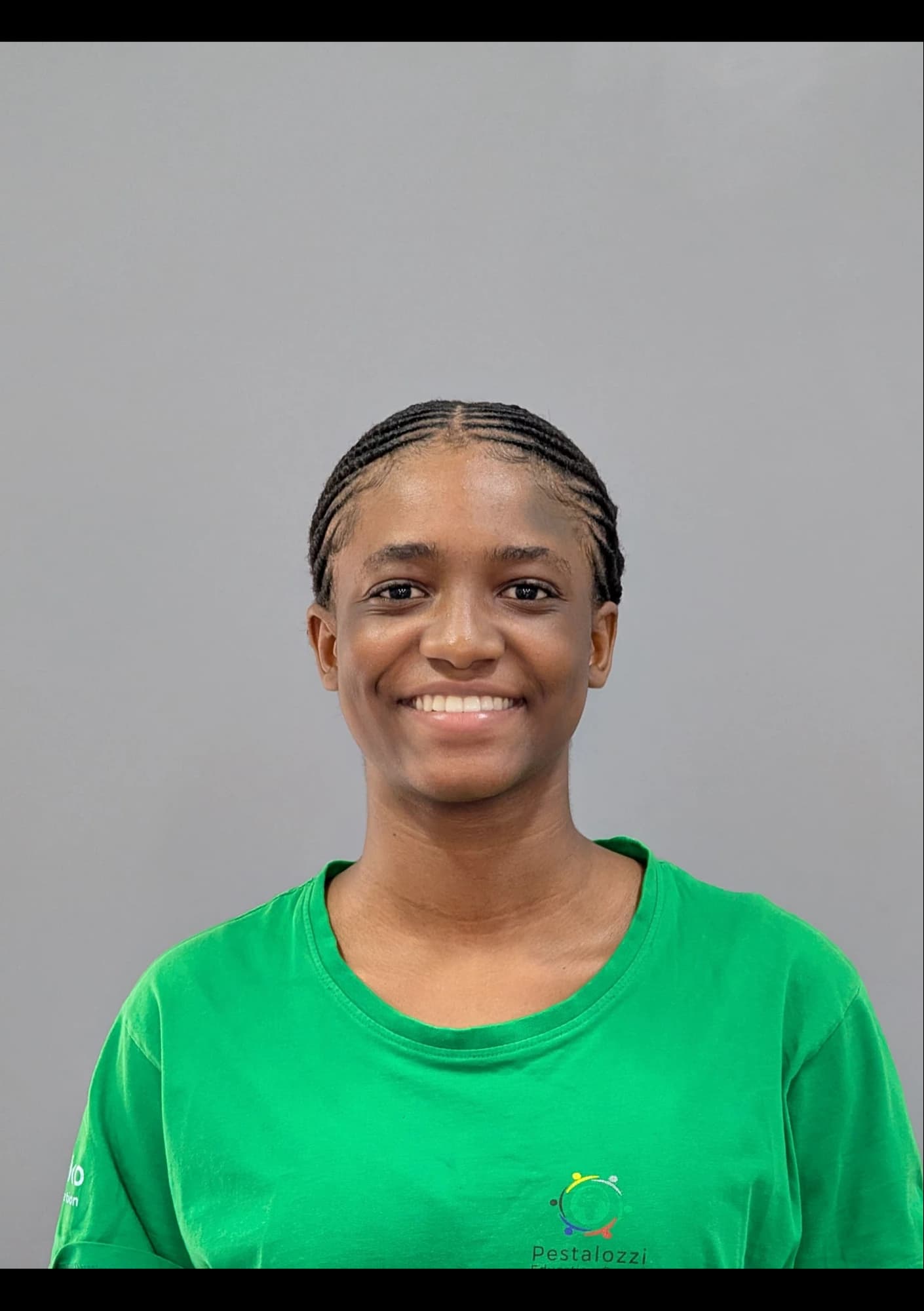
Mirriam Mutasa
Pestalozzi Education Center · Zambia
BuildUp's student
Our student community
BuildUp students come from schools across six continents. Join the lab and you're building alongside an ambitious, competitive group of peers.

Akshara International

Pathways World School
CNS Pune
Riverside Academy - Qatar

Gems Modern Academy - Abu Dhabi

The Doon School

International Academy
Vidyagyan School
MIT Vishwashanti Gurukul
Billabong High International
Pine View School
Enko International Schools
Shri Ram School

Indus Bangalore

TISB

Mahindra International School

Heritage International School
Thomas Jefferson high School

Kodaikanal International School

Woodstock School

Oakridge International
Bishops School Pune
Prudence School

Future Kids School Hyderabad

Stonehill International School

Indus Pune
Vidya Valley School
Mahindra United World College

BD Somani

Pestalozzi Education Center
Cygnus World School

San Mateo High School

Applications open
Applications close Dec 1, 2026. 30 seats. Cohort runs Dec 19, 2026 – Jan 31, 2027. Applying earlier improves your odds — reviewed on a rolling basis.
Closes
Dec 1
Seats
30
Runs
Dec 19–Jan 31
FAQ
Everything you need to know before you apply to the lab.

